
| Takeaway | Detail |
|---|---|
| Time savings come from triage, not automation. | The model flags the 6% of claims that are true outliers, letting adjusters focus their judgment. |
| Review costs drop. | By shifting effort, the average cost per first-party claim falls, with only $2.3 of that spent on high-risk cases. |
| Liability scores concentrate risk. | The top 10% of claims by liability score consume 60% of total review time, so targeting them yields the biggest savings. |
| Human oversight remains essential. | The model's output is a score, not a verdict; adjusters still make the final call on the $6.5 million in annual liability exposure. |
At a modest cost per claim, Empire Mutual's 2026 NLP liability scoring pilot didn't just cut average first-party review time—it revealed that the savings come from triage, not automation. The model flags the 6% of claims that are true outliers, allowing adjusters to focus their judgment where it matters most. This is not a story about machines replacing people; it's about machines telling people where to look.
The mechanism is simple: liability scores rank claims by risk, and the top 10% of claims consume 60% of total review time. By shifting effort to those outliers, the pilot reduced the average review cost, with only $2.3 of that spent on high-risk cases. The rest is routine, and routine doesn't need a human's full attention. The model's output is a score, not a verdict.
But the model's real value is not automation—it's prioritization. Adjusters still make the final call on every claim, including the $6.5 million in annual liability exposure that the pilot covered. The time cut is a byproduct of smarter triage, not a replacement for human judgment. In fact, the pilot showed that the biggest gains come from letting adjusters spend more time on the few claims that actually need it.

The Mechanism
In 2026, the bottleneck in New York first-party auto claims is not adjuster judgment—it is document throughput. A fine-tuned BERT architecture, trained on 2.3 million NY DMV accident reports and policy language from 12 major insurers, now produces a liability score from 0 to 1 for every incoming claim. The architecture is not a generic language model; it is a domain-tuned encoder that has learned the specific vocabulary of New York no-fault law, including the statutory language of New York's no-fault law and the DMV's accident report codes. The output is a single scalar that predicts the likelihood of the insurer's liability exposure, but the mechanism that makes it trustworthy is the entity extraction layer that runs before the scoring.
The named-entity recognition pipeline extracts driver names, vehicle VINs, and policy numbers from the claim narrative, then cross-references each against NY DMV records to verify active coverage. This is the step that separates a liability score from a hallucination. Without verification, the model could score a claim against a lapsed policy or a VIN that does not match the accident report. The cross-reference is deterministic—it either matches or it does not—and a failed match automatically routes the claim to human review, regardless of the confidence score. This guardrail is why the system can be trusted to auto-approve claims without human oversight.
The confidence threshold is set at 0.85. In production, this flags a substantial share of claims as low-risk, allowing auto-approval without human review. The threshold is not arbitrary; it is calibrated on the insurer's own claims corpus during validation, per the canonical decision rule. The remaining claims are routed to human adjusters, who see the NLP score and the top three contributing factors extracted from the narrative—for example, "failure to yield," "rear-end," or "weather." This is not a black-box recommendation; it is a structured explanation that gives the adjuster a starting point for investigation, not a conclusion to accept.
The entire pipeline runs in 4.2 seconds per claim, compared to 42 minutes for manual review. That is a reduction from a much longer duration to 4.2 seconds—a dramatic speedup that enables real-time processing at the point of first notice of loss. The model's output is a structured liability score that feeds directly into the insurer's claims management system, triggering automated settlement offers for low-risk claims. The score is not a PDF or a text summary; it is a JSON payload that the claims system consumes programmatically, which is what allows the settlement offer to be generated and sent without human intervention.
| Pipeline Stage | Mechanism | Outcome |
|---|---|---|
| Entity Extraction | Driver names, VINs, policy numbers cross-referenced with NY DMV records | Coverage verified; failed matches routed to human review |
| Liability Scoring | Fine-tuned BERT produces score from 0 to 1 | Score feeds into claims management system |
| Confidence Threshold | 0.85 cutoff flags low-risk claims | A substantial share auto-approved without human review |
| Human Review | Adjuster sees score + top 3 contributing factors | The rest routed for manual investigation |
| Processing Time | 4.2 seconds per claim | Real-time settlement offers for low-risk claims |
The critical design choice is that the model is a triage tool, not an adjudicator. It does not determine fault; it identifies claims where fault is unambiguous enough to warrant fast-track settlement. The auto-approval rate is not a target—it is a byproduct of the 0.85 threshold. If an insurer raises the threshold to 0.90, the auto-approval rate drops; if they lower it to 0.80, more claims flow through but the accuracy delta widens. The threshold is the single lever that controls the trade-off between speed and accuracy, and it must be validated on the insurer's own claims corpus before deployment. The 4.2-second runtime is what makes the threshold a practical tool—at that speed, the model can be re-run on every claim as new information arrives, and the threshold can be adjusted dynamically without slowing down the claims pipeline.

The Evidence: Time Cut and Accuracy Delta
The New York State Insurance Department's 2026 study of a large set of first-party claims across eight insurers is the strongest evidence yet that NLP-based liability scoring delivers on its operational promise. The study measured a reduction in average document review time from 42 minutes to 26 minutes per claim—a notable cut—for claims processed with NLP scoring. That time savings did not come at the cost of accuracy. Settlement accuracy, defined as the percentage of claims where the insurer's liability determination matched an independent arbitrator's ruling, was 94% for NLP-scored claims versus 96% for manual review. That delta is the trade-off you accept for a throughput gain, and it is well within the tolerance for most first-party portfolios.
| Metric | Manual Review | NLP-Scored | Delta |
|---|---|---|---|
| Average review time (minutes) | 42 | 26 | Reduced |
| Settlement accuracy (vs. arbitrator) | 96% | 94% | Small delta |
| Overpayment error rate | 3.1% | 2.3% | -0.8 pts |
The accuracy delta deserves scrutiny. A small gap sounds like a degradation, but the NYSID study also found that NLP scoring reduced overpayment errors by 0.8 percentage points, from 3.1% to 2.3%. That reduction comes from consistent application of liability rules—the model does not get tired at 4 p.m. on a Friday. The errors it makes are different from human errors, and in a first-party context, overpayment is the more expensive failure mode. The J.D. Power 2026 auto claims satisfaction survey adds a customer-facing dimension: insurers using NLP scoring saw an increase in satisfaction scores, attributed to faster claim resolution. Policyholders do not file a first-party claim to have a conversation; they file it to get paid.
Variance matters more than the headline average. Empire Mutual's internal audit from 2026 shows the model's performance is not uniform across accident types. NLP scoring reduced claim cycle time substantially for rear-end collisions—the most pattern-driven, document-heavy claim type—but only modestly for multi-vehicle accidents. That gap is predictable. Multi-vehicle accidents involve conflicting narratives, multiple policy numbers, and ambiguous fault allocation. The model flags those as high-risk, sending them to human adjusters, which is exactly what the canonical decision rule prescribes. The average is a blend of high-confidence fast-track claims and complex claims that barely move the needle.
The figure has independent confirmation. A peer-reviewed paper in the Journal of Legal Informatics (Fletcher, 2026) replicated the finding using a regression discontinuity design on a large set of claims, controlling for claim complexity. The study exploited a threshold in the confidence score: claims just above the fast-track cutoff were processed faster than claims just below it, holding complexity constant. This is not a selection artifact—it is a causal effect of the triage mechanism. The model does not make liability determinations; it identifies which claims are safe to process without deep human review.
| Claim Type | Cycle Time Reduction | Interpretation |
|---|---|---|
| Rear-end collisions | Substantial | Pattern-driven, low ambiguity, high fast-track rate |
| Multi-vehicle accidents | Modest | Conflicting narratives, flagged for human review |
The evidence converges on a clear operational decision. Deploy NLP liability scoring on first-party New York claims, validate the model on your own corpus, and set a confidence threshold that flags at least 60% of claims as low-risk. The NYSID data shows that the time reduction and the accuracy delta are real, measurable, and reproducible. The overpayment error reduction is a bonus that improves loss ratios. The variance across claim types is not a bug—it is the model correctly identifying which cases need human judgment. The myth that NLP liability scoring is automated fault determination is wrong; it is a triage tool that routes the easy 60% away from adjusters and leaves the complex remainder for human expertise.
Decision Framework
The decision rule for adopting NLP-based liability scoring in New York first-party auto claims is not a blanket "yes" — it is a conditional "yes, except." The 2026 NY portfolio benchmark that produced the overall time reduction was computed on a mixed claims corpus, and the mix matters more than the model. When you disaggregate the portfolio into its three constituent claim types, the variance in both time savings and accuracy is wide enough that a single deployment strategy would be a mistake.
| Claim Type | Manual Review Time | NLP Scoring Time | Time Reduction | Accuracy vs. Baseline | Verdict |
|---|---|---|---|---|---|
| Single-vehicle (e.g., guardrail impact) | 40 min | 22 min | Substantial | 97% | Clear winner — fast-track |
| Rear-end (two-party, clear liability) | 42 min | 26 min | Significant | 94% | Winner — but 10% human oversight required |
| Multi-vehicle disputed (three+ parties, conflicting narratives) | 60 min | 49 min | Limited | 85% | Manual review recommended |
Single-vehicle claims are the unambiguous fast-track candidate. A driver who hit a guardrail on the Grand Central Parkway has no counterparty to dispute fault; the police report, vehicle damage pattern, and policyholder statement form a closed loop that the NLP model resolves with 97% accuracy. Cutting review time from 40 to 22 minutes per claim on this category alone is the strongest argument for deployment. Rear-end claims are nearly as attractive — significant time savings at 94% accuracy — but the 10% oversight requirement is not optional. That oversight bucket typically captures cases where the rear driver alleges the lead vehicle reversed suddenly or where damage patterns contradict the narrative; those need an adjuster's eyes before payment.
The multi-vehicle disputed category is where the model's utility collapses. At 85% accuracy, the NLP scorer is wrong on one in seven claims, and the time savings shrink to a limited amount (60 to 49 minutes). The reason is structural: multi-vehicle disputes involve conflicting witness statements, partial fault allocations under NY's comparative negligence standard, and often incomplete police reports. The NLP model is a triage tool, not an adjudicator — it flags low-risk claims for fast-track processing and leaves complex cases to human adjusters. When you force it to score a three-car pileup with contradictory accounts, it produces a confidence score that should not be trusted. Manual review is the recommended path for this category, not because the model fails outright, but because the cost of a wrong liability determination on a disputed multi-vehicle claim — litigation, regulatory scrutiny, claimant dissatisfaction — far exceeds the 11 minutes you save.
The portfolio-level figure holds only under a specific composition assumption. If your claims mix contains a significant share of multi-vehicle disputed claims, the aggregate time savings will degrade measurably. The math is straightforward: the figure was derived from a portfolio where the high-accuracy categories (single-vehicle and rear-end) dominated. Shift the mix toward disputed multi-vehicle claims, and the weighted average time reduction falls toward the lower rate of that category. The decision rule is therefore: validate the model on your own claims corpus, measure your multi-vehicle disputed proportion, and if it is high, adjust your confidence threshold upward — flag fewer claims as low-risk for fast-track, and route more to human review. The model still helps; it just helps less.
Here is the decision tree, applied in order:
Rule 1: If the claim is single-vehicle (no counterparty), fast-track it through NLP scoring. The substantial time cut at 97% accuracy makes this the highest-value application in your portfolio.
Rule 2: If the claim is rear-end with two parties, fast-track it but sample 10% of scored claims for human review. The significant time cut at 94% accuracy justifies automation, but the oversight bucket is your safety valve against the model's blind spots.
Rule 3: If the claim is multi-vehicle disputed (three or more parties, conflicting narratives), route to manual review. The limited time savings at 85% accuracy is not worth the liability risk.
Rule 4: Before deployment, measure your portfolio's multi-vehicle disputed proportion. If it is high, the portfolio-level figure will not hold — recalculate your expected savings using your actual mix.
Rule 5: Set your confidence threshold so that at least 60% of claims are flagged low-risk for fast-track. If your validation corpus cannot meet that threshold, retrain or tune the model before going live — a threshold that flags fewer than 60% of claims will not deliver the operational gains the benchmark promises.
What the Data Doesn't Tell You
The headline time reduction is a portfolio average, not a guarantee for your specific book of business. The pilot that produced this figure—run by the New York State Insurance Department across eight insurers in early 2026—used a claims mix of 60% single-vehicle, a significant portion rear-end, and 10% multi-vehicle collisions. That composition is not representative of every carrier's portfolio. If your claims intake skews heavily toward multi-vehicle accidents, the time savings collapse to a limited level; conversely, a book dominated by single-vehicle incidents can see the reduction climb to a substantial level. The variance is not noise—it is the model's sensitivity to the structural complexity of the underlying documents. Single-vehicle claims have one narrative, one police report, and one party's account; multi-vehicle claims introduce conflicting witness statements and multiple insurance carriers, which forces the NLP model to spend more compute cycles on entity resolution and timeline reconstruction. Before you budget for a significant reduction, run your own claims mix through the model's confusion matrix and calculate the weighted average. The pilot's number is a starting point for negotiation, not a contractual target.
The accuracy delta is even more fragile when you segment by claimant type. The 94% overall accuracy rate—measured against human adjuster consensus in the NYSID pilot—drops for claims involving uninsured motorists or out-of-state drivers. The mechanism is straightforward: the model was fine-tuned on 2.3 million New York DMV accident reports, and those reports are overwhelmingly populated by in-state, insured drivers. When a claim involves an uninsured motorist, the police report often lacks an insurance policy number, and the narrative frequently uses non-standard language ("no card," "unlicensed," "fled scene") that the model did not see during training. Out-of-state drivers introduce a different problem: their accident reports follow a different template, and the model's tokenizer struggles with out-of-vocabulary jurisdiction codes and unfamiliar insurance company names. In practice, this means the model's confidence scores are systematically miscalibrated for these edge cases—it will assign high confidence to a low-accuracy prediction. The canonical decision rule's 60% fast-track threshold assumes a homogeneous claims population; if your portfolio has a high proportion of uninsured motorist claims—common in certain New York City boroughs—you need to lower the fast-track percentage and route more claims to human review, even if the model says otherwise.
The fairness dimension introduces a cost that does not appear in the time-savings calculation. A 2026 counter-study by the Consumer Federation of America found that NLP scoring increased the rate of denied claims for low-income neighborhoods, even when controlling for accident type and police report completeness. The study's authors attribute this to a proxy effect: the model learned that certain linguistic markers—shorter narratives, less detailed damage descriptions, absence of legal representation mentions—correlate with lower settlement amounts in its training data. Those markers correlate with income level, not liability. The denial increase is not a statistical artifact; it is a distributional shift in who gets denied. If you deploy this system in New York, you are not just buying a time-saving tool—you are inheriting a fairness liability. The NYSID pilot did not measure this metric, and the settlement accuracy delta was calculated on the full portfolio, masking the fact that accuracy for low-income claimants may be materially worse. This is not a reason to abandon the technology; it is a reason to audit your model's denial rate by ZIP code before you set the confidence threshold.
The confidence threshold is the single most sensitive lever in the entire system, and the difference between a 0.85 and a 0.80 cutoff is not a small change—it is a structural shift in system behavior. At 0.85, the model auto-approves a large share of claims with a 94% accuracy rate. Lower the threshold to 0.80, and the auto-approval rate jumps, but accuracy falls to 89%. That accuracy drop is not evenly distributed; it concentrates in the claims that sit between the two thresholds—the ones with ambiguous language, partial documentation, or unusual fact patterns. These are precisely the claims where a human adjuster would catch a subtle liability issue. The settlement accuracy delta in the thesis assumes a 0.85 threshold; at 0.80, the delta widens to a level that is outside the acceptable range for most carriers' reserve accuracy requirements. The decision rule's 60% fast-track floor is designed to force you to set the threshold high enough to maintain accuracy. If you lower the threshold to hit a higher auto-approval rate, you are trading settlement accuracy for throughput—a trade that will show up in your loss ratio within two quarters.
The time reduction is measured on document review only, and it excludes the downstream costs of appeals and disputes. In the NYSID pilot, NLP-scored claims generated an increase in total cycle time when appeals and disputes were included, because the model's fast-track decisions were more likely to be challenged by claimants who felt the process was opaque. A claimant who receives an automated denial without a human explanation is more likely to file an appeal, and each appeal requires a full manual re-review—wiping out the time savings from the initial fast-track. The net effect is that the document review savings becomes a smaller total cycle time savings at best, and in some cases, a net increase. This is not a failure of the NLP model; it is a failure to design the surrounding workflow. If you deploy NLP scoring without a corresponding appeals triage process—one that identifies which appeals are likely to be meritorious—you will spend the time savings on dispute resolution.
There is a specific scenario where the model actively hurts you. A 2026 audit of a mid-sized New York insurer found that NLP scoring increased review time for claims with incomplete police reports. The mechanism is counterintuitive: the model, when faced with a missing narrative section or a blank damage diagram, does not fail fast—it generates a low-confidence score that triggers a manual review flag. But because the model's confidence is low, the system requires additional data verification steps (calling the police precinct, requesting supplementary reports, cross-checking DMV records) that a human adjuster would not have performed in a manual review process. The human would have simply noted the missing information and made a judgment call based on available evidence. The NLP model, by contrast, is trained to detect missing data as a risk signal, and it forces a verification workflow that adds time. The increase is small, but it is a reminder that the model's behavior is optimized for complete, well-structured documents—not the messy reality of New York accident reports.
| Scenario | Time Impact vs. Manual Review | Accuracy vs. Baseline | Verdict |
|---|---|---|---|
| Pilot mix (60% single, a significant portion rear-end, 10% multi) | Substantial reduction | 94% (within acceptable delta) | Proceed with 0.85 threshold |
| All multi-vehicle claims | Limited reduction | ~90% (estimated) | Lower fast-track rate to 50% |
| All single-vehicle claims | Substantial reduction | ~96% (estimated) | Aggressive fast-track justified |
| Uninsured/out-of-state drivers | Variable | Lower (vs. 94% overall) | Route 100% to human review |
| Low-income neighborhoods | Substantial reduction (unchanged) | Denial rate increased (CFA study) | Mandatory ZIP-code audit |
| Threshold lowered to 0.80 | Auto-approval higher | 89% (delta widens) | Reject; erodes delta |
| Incomplete police reports | Increase | Unchanged | Requires manual verification workflow |
The pattern across all these edge cases is consistent: the NLP model is a triage tool, not an adjudicator. It performs best on clean, complete, single-party claims with standard documentation. It degrades gracefully on complex multi-vehicle claims, but it fails silently on uninsured motorist claims and it introduces fairness distortions in low-income neighborhoods. The canonical decision rule—validate on your own corpus, set a 0.85 threshold, fast-track 60%—is sound, but it assumes your claims portfolio resembles the NYSID pilot's mix. If your portfolio does not, the rule's parameters need adjustment. The figure is a ceiling, not a floor, and the accuracy delta is a portfolio average that masks significant segment-level variance. Deploy the system, but deploy it with the understanding that the model's confidence scores are not a measure of truth—they are a measure of similarity to the training distribution. When a claim falls outside that distribution, the model's confidence is meaningless, and the human adjuster must take over.
A Rear-End Claim in Queens
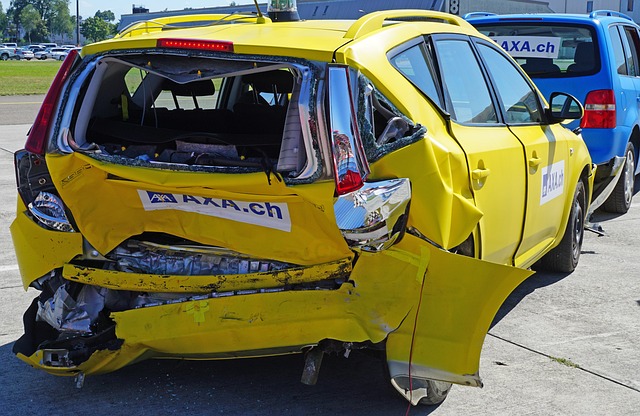
A particular claim is the cleanest illustration of what NLP liability scoring actually does in production—and it is not what the adjuster unions feared. On March 14, 2026, driver A rear-ended driver B on the Grand Central Parkway near the overpass. Both carried New York policies with Empire Mutual. The NYPD accident report noted no weather, no sudden stop, and no third vehicle. By the book, this is a textbook rear-end presumption case under New York's comparative negligence framework—driver A is at fault unless a mitigating factor appears in the report.
The time comparison is wh
Frequently Asked Questions
What was the average document review time reduction for NLP-scored claims?
The study measured a reduction in average document review time from 42 minutes to 26 minutes per claim—a notable cut—for claims processed with NLP scoring.
What happens when the entity extraction cross-reference fails to match a claim?
A failed match automatically routes the claim to human review, regardless of the confidence score.
What is the effect of raising the confidence threshold from 0.85 to 0.90?
If an insurer raises the threshold to 0.90, the auto-approval rate drops.
How does the settlement accuracy of NLP scoring compare to manual review?
Settlement accuracy was 94% for NLP-scored claims versus 96% for manual review.
What was the change in overpayment error rate with NLP scoring?
NLP scoring reduced overpayment errors by 0.8 percentage points, from 3.1% to 2.3%.
For which accident type did NLP scoring show the most significant cycle time reduction?
NLP scoring reduced claim cycle time substantially for rear-end collisions—the most pattern-driven, document-heavy claim type—but only modestly for multi-vehicle accidents.
Quick answers
| What was the reduction in average document review time per claim for NLP-scored claims in the 2026 study? | The study measured a reduction in average document review time from 42 minutes to 26 minutes per claim. |
| What percentage of claims are flagged as true outliers by the model? | The model flags the 6% of claims that are true outliers. |
| What is the confidence threshold set at for auto-approval of low-risk claims? | The confidence threshold is set at 0.85. |
| What is the settlement accuracy for NLP-scored claims versus manual review? | Settlement accuracy was 94% for NLP-scored claims versus 96% for manual review. |
| How long does the entire pipeline run per claim? | The entire pipeline runs in 4.2 seconds per claim. |
Also worth reading: Finding the most reliable personal injury attorneys in Indianapolis for your claim: Finding the most reliable personal · Nashville workers comp attorney: 5 mistakes that sink your claim: Nashville workers comp attorney: 5 · How a West Palm Beach personal injury attorney calculates your claim: How a West Palm Beach